


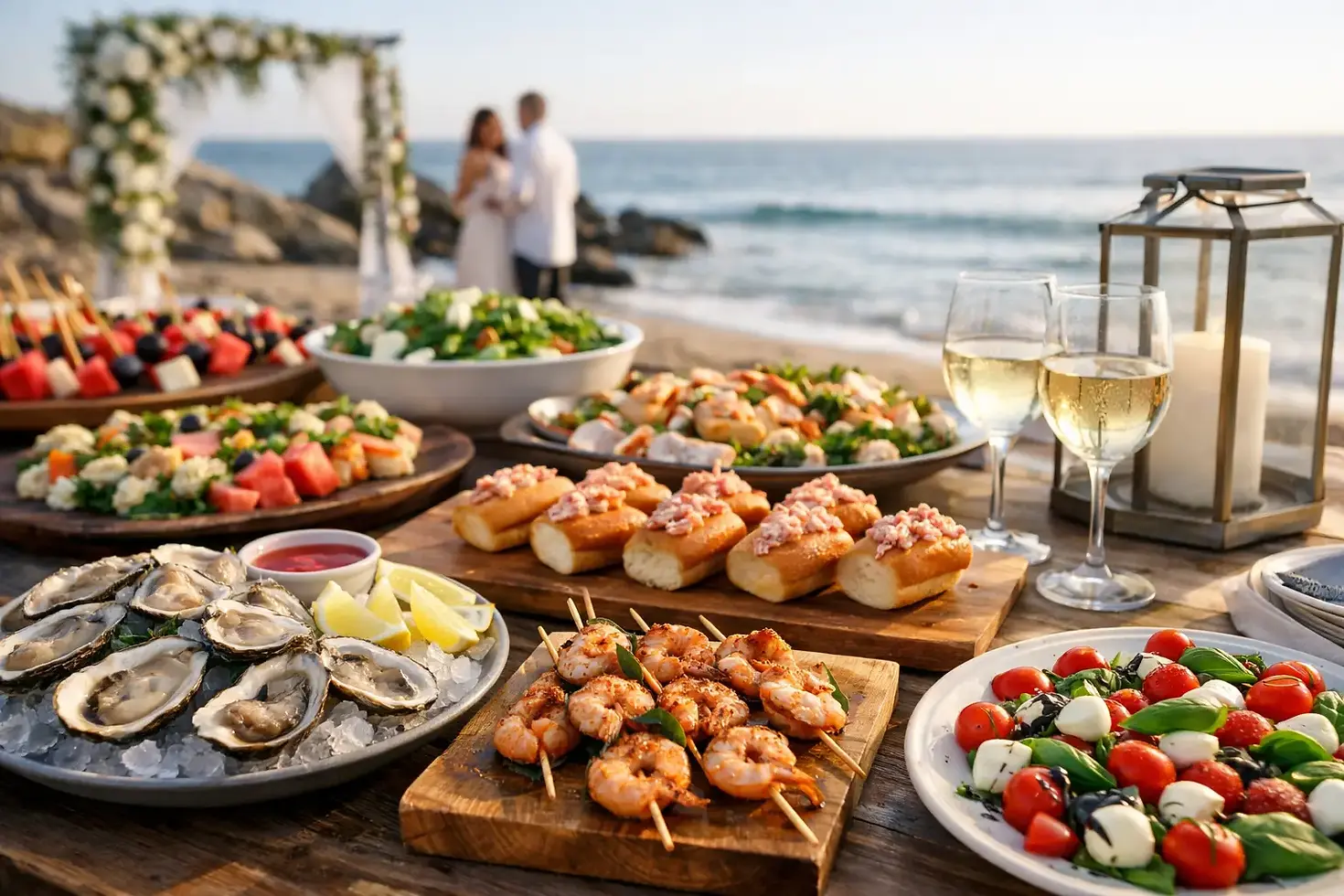
Coastal Wedding Catering Menu Ideas That Feel Local
A reception held within sight of the Pacific calls for more than seafood on ice and a few citrus garnishes. The right coastal wedding catering menu should feel connected to the setting: sunlit, seasonal, generous, and polished enough for a meaningful celebration. In San Diego’s coastal communities, that often means bringing together pristine local ingredients, Mediterranean brightness, and a service style that lets guests settle into the moment.
The most memorable menus do not lean too hard on a theme. They use the coast as a point of view. Think market vegetables at their peak, responsibly sourced fish prepared with restraint, grilled meats with smoke and char, and desserts that feel light after an afternoon by the water. The result is not a novelty beach menu. It is fine dining with a sense of place.
Start With the Feeling You Want Guests to Remember
Before selecting individual dishes, consider the rhythm of the wedding. A sunset ceremony in Encinitas followed by a reception on a private estate creates a different appetite than a formal evening in a coastal venue. The menu should support the pace of the day rather than compete with it.
For an elegant, relaxed celebration, passed appetizers and a beautifully composed dinner allow conversation to continue naturally. If the goal is a more social, high-energy reception, chef-attended stations can create movement and give guests more variety without the formality of a plated multi-course meal. A family-style dinner works especially well for intimate gatherings, where shared platters create warmth while still feeling elevated.
There is no single right service format. Plated dining offers a refined, paced experience, but it requires accurate guest counts and careful attention to dietary selections. Stations feel abundant and flexible, though they need thoughtful layout and timing to prevent lines. The best choice is the one that fits your guest list, venue, and the kind of evening you want to host.
Build a Coastal Wedding Catering Menu Around Seasonality
A coastal menu earns its character from freshness, not from piling every ocean-inspired ingredient onto one plate. Seasonal produce gives a chef room to create color, texture, and balance alongside seafood and meat selections.
Spring menus can lean into English peas, tender herbs, asparagus, strawberries, and bright citrus. Summer opens the door to heirloom tomatoes, stone fruit, sweet corn, zucchini blossoms, and local berries. In fall, roasted squash, figs, grapes, wild mushrooms, and warm spice bring more depth while preserving the clean, sunlit style that suits Southern California.
Seafood should be selected with the same intention. A delicate white fish may be perfect with a fennel confit, saffron broth, and herb oil, while a richer preparation such as miso-glazed salmon can carry bolder flavors. A raw bar can be spectacular for a cocktail hour, but it depends on the venue, weather, guest count, and access to proper refrigeration. It should feel effortless to guests because every detail behind it has been carefully planned.
For couples who love seafood but want a broader menu, offer one ocean-forward entrée alongside a strong land-based option. A slow-roasted beef tenderloin with red wine jus, a herb-marinated airline chicken, or a Mediterranean-inspired vegetable course gives every guest a choice without diluting the menu’s coastal point of view.
Let Bright, Layered Flavors Do the Work
Modern coastal cuisine benefits from contrast. Creamy can be lifted with citrus. Rich can be balanced with herbs or pickled vegetables. A familiar ingredient becomes more memorable when French technique meets Mediterranean or Asian influence.
Consider a few combinations that bring this approach to life: chilled shrimp with yuzu cocktail sauce; hamachi crudo with avocado, cucumber, and ponzu; grilled local fish with preserved lemon beurre blanc; or lamb with smoked eggplant, mint, and pomegranate. These are flavors with dimension, but they remain approachable for a diverse wedding guest list.
A menu also needs a sense of progression. Begin with crisp, fresh bites during cocktail hour, move into dishes with more warmth and depth at dinner, and finish with dessert that feels celebratory rather than heavy. This is especially important for outdoor receptions, where heat, sea air, and a full day of festivities can change how guests experience food.
Make Cocktail Hour Feel Generous, Not Overstuffed
Cocktail hour sets the tone for the reception. It is often where guests first experience the menu, and where a skilled culinary team can make the evening feel immediately cared for.
Passed canapés are ideal for keeping the energy moving. A thoughtful selection might include tuna tartare on crisp rice, Dungeness crab cakes with herb aioli, petite lamb skewers, and roasted mushroom tartlets for vegetarian guests. Four to six substantial bites across the cocktail hour usually feel more satisfying than a long list of tiny, overly delicate items.
A display can add visual presence, particularly for a larger reception. Beautifully arranged seasonal crudités with whipped feta, a refined antipasto board, or a chilled seafood presentation can give guests something to gather around. The key is balance. If there is a substantial grazing display, passed bites can be more focused. If dinner follows quickly, avoid making cocktail hour so filling that guests lose interest in the meal you have planned.
Give Dietary Needs the Same Level of Care
A refined wedding menu should never make guests with dietary restrictions feel like an afterthought. The goal is not simply to provide an alternative plate. It is to create a dish that belongs on the menu in its own right.
A vegan entrée, for example, might feature roasted cauliflower, white bean purée, charred broccolini, salsa verde, and toasted almond. Gluten-free guests can enjoy naturally gluten-free preparations such as grilled fish with seasonal vegetables and a bright herb sauce. When these choices are planned from the beginning, the kitchen can execute them with confidence and the presentation remains consistent across every plate.
Be candid about allergies and sensitivities early in the planning process. The more information a chef has before the event, the more gracefully those accommodations can be folded into the service. Last-minute substitutions are possible in some cases, but they rarely receive the same level of creative attention as dishes designed with the full menu in mind.
Choose a Dinner Format That Fits the Venue
Private homes, oceanfront lawns, and boutique venues are among the most beautiful places to host a wedding, but each comes with practical considerations. A full-service catered dinner requires an understanding of kitchen access, power, staging space, rental needs, and the distance between the cooking area and guest tables.
That does not mean the food needs to be simplified. It means the menu should be designed for the environment. Crisp-skinned fish needs precise timing. A composed salad may hold better than a fragile greens course on a warm afternoon. Braised short rib can be an outstanding choice for a cooler coastal evening because it travels and plates beautifully, while still feeling luxurious.
At Flavor Affinity, this venue-aware approach is part of creating restaurant-caliber dining in a client’s chosen setting. The menu, service, rentals, and final presentation should work together so the hosts are free to enjoy their guests rather than manage logistics.
A Sample Coastal Dinner Progression
A well-paced dinner might open with a chilled first course of local citrus, shaved fennel, avocado, and a delicate crab salad. For the main course, guests could choose between pan-roasted sea bass with spring vegetables and saffron beurre blanc, beef tenderloin with potato fondant and red wine shallot jus, or a seasonal vegetable entrée built around grilled eggplant and farro.
Dessert might bring in olive oil cake with macerated berries and mascarpone, or a warm chocolate tart paired with sea salt caramel. Add late-night bites only if they suit the crowd and the timeline. Mini fish tacos, truffle fries, or a chef-made slider can be a welcome finish after dancing, but they are most effective when they feel like an intentional final gesture rather than an obligatory extra.
Keep the Menu Personal Without Making It Complicated
The best wedding menus reveal something about the couple. Maybe that is a favorite dish from a first date, a family recipe reimagined for a larger guest count, or a late-night bite inspired by weekends spent along the coast. Personal touches make a menu feel lived-in and specific.
Still, personalization works best when it is selective. A menu does not need to represent every trip, every favorite restaurant, or every cuisine a couple has ever enjoyed. Choose two or three details with real meaning, then let the rest of the menu create harmony around them. That restraint is what keeps a dinner elegant.
As you plan, picture the final hour of the night: glasses on the table, the ocean air cooling, and guests still talking about a dish they did not expect to love. Build your menu for that feeling, and the celebration will carry it long after the last course is served.


Comments