


French Cooking Techniques for Fish
A beautifully cooked piece of fish has very little room for error. A minute too long, a pan too hot, or a sauce that overwhelms instead of supports, and the whole plate loses its poise. That is exactly why french cooking techniques for fish remain so relevant - they bring structure, restraint, and clarity to an ingredient that rewards precision.
For hosts who love seafood, or anyone planning an elevated dinner at home, French technique offers a reliable way to create fish that feels refined without becoming fussy. The goal is not to hide freshness under heavy preparation. It is to honor texture, preserve moisture, and build flavor in careful layers.
Why french cooking techniques for fish still matter
French cuisine has long treated fish with a certain discipline. The approach starts with respect for the product, then moves to heat control, classic sauce work, and timing that is almost exacting. That sounds formal, but the result is surprisingly natural on the plate.
Fish is delicate by nature. Unlike a braise or a roast that can absorb some variation, seafood reacts quickly. French cooking methods are useful because they account for that sensitivity. They rely on cues like translucence, flake, aroma, and feel rather than brute force cooking.
There is also a hospitality advantage. When fish is prepared with classic technique, it tends to feel lighter, cleaner, and more composed, which makes it ideal for coastal entertaining. It suits intimate dinners, wedding menus, and polished family-style meals where guests want something elegant but comfortable.
The core idea: gentle control over aggressive heat
The common thread in french cooking techniques for fish is control. High heat absolutely has a place, especially when you want crisp skin or caramelization, but it is rarely uncontrolled. A French-trained cook is usually thinking about how to guide the fish to doneness, not simply how to cook it as fast as possible.
That means preheating the pan properly, drying the surface well, seasoning with intention, and choosing the right fat for the method. It also means accepting that different fish need different treatment. A thick halibut fillet can take a different approach than a thin sole, and a rich salmon behaves differently than lean branzino.
This is where experience matters. The technique may be classic, but the application depends on fat content, thickness, skin, and how the fish will be served.
Pan-roasting and sauteing for crisp skin and clean flavor
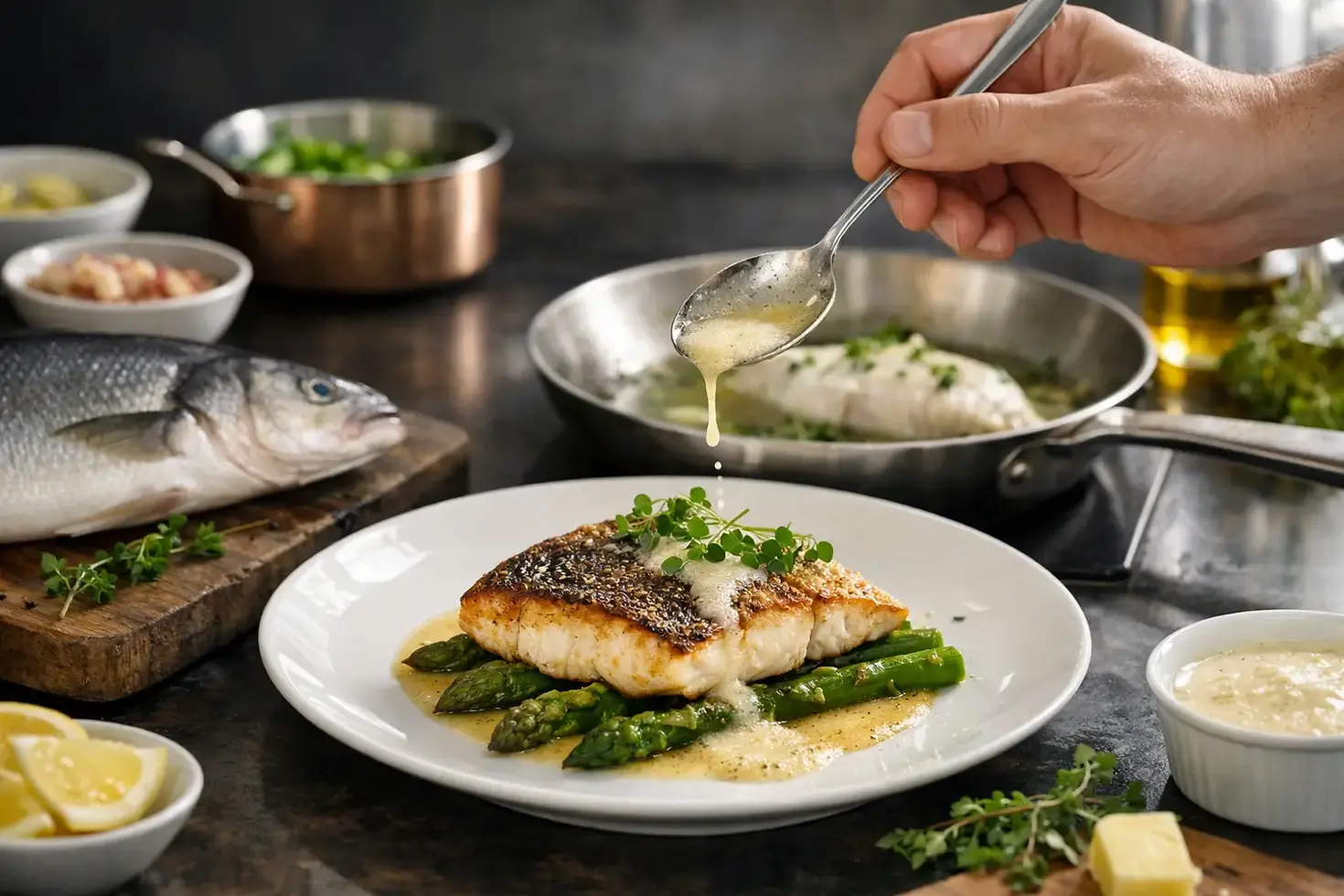
One of the most useful French methods for fish is pan-roasting, sometimes beginning on the stovetop and finishing in the oven. It is especially effective for skin-on fillets like salmon, sea bass, or snapper because it gives you contrast - crisp skin, moist flesh, and a lightly caramelized exterior.
The process sounds simple, but details matter. The fish should be dry, the pan should be hot but not smoking aggressively, and the first contact with the surface should be deliberate. If the skin sticks, the pan was often not ready or the fish moved too soon.
A classic French instinct here is to baste with butter during the final moments of cooking. Butter adds flavor, but it also helps regulate surface heat and encourages even cooking. Often, aromatics like thyme, shallot, or garlic join the pan, perfuming the fish without dominating it.
This method works beautifully for entertaining because it gives the plate a restaurant-level finish. The trade-off is timing. Pan-roasted fish does not wait well, so service has to be organized.
Poaching for tenderness and elegance
If pan-roasting is about texture and color, poaching is about finesse. French kitchens have long used poaching for delicate fillets, whole fish, and seafood intended for composed presentations. Court-bouillon, a lightly aromatic poaching liquid made with water, wine, herbs, and vegetables, is a classic example.
Poaching is ideal when you want fish to stay exceptionally tender. It is also forgiving in one sense - gentle liquid heat reduces the chance of a dry result. At the same time, it can go flat if the liquid is underseasoned or the sauce lacks contrast.
That is why poached fish is often paired with a sauce that brings brightness or richness back to the plate. Think beurre blanc with a white fish, or a velvety herb sauce that adds lift without weight. The fish remains the focus, but the surrounding elements give it shape.
For private dining and special occasions, poaching can feel especially luxurious. It reads as polished and understated, which is often more memorable than something louder.
En papillote and the art of contained flavor
Cooking fish en papillote - in parchment - is another French technique that continues to earn its place. The fish is wrapped with aromatics, vegetables, citrus, or wine, then baked so the contents steam gently inside the packet.
What makes this method so appealing is how self-contained it is. Moisture stays in the pouch, aromas concentrate, and the fish cooks in a protected environment. It is a thoughtful choice for lean fish that can dry out easily.
There is also a presentation benefit. Opening the parchment at the table releases a wave of fragrance that immediately feels special. For hosts, that moment creates a sense of occasion without requiring theatrical excess.
Still, it is not the right method for every menu. En papillote will not give you crisp skin or deep browning, so if texture contrast is the priority, another approach may be better.
Classic sauce work is where French fish cookery stands apart
A defining strength of French technique is sauce. Not heavy sauce for its own sake, but sauce used with restraint to complete the dish. Fish often needs that final element - acidity, butter, stock reduction, herbs, or wine - to feel fully composed.
Beurre blanc is one of the most recognizable examples. Built from a reduction of wine or vinegar and shallots, then emulsified with butter, it brings richness balanced by acidity. With white fish, it can be remarkable. But it depends on proportion. Too much and the sauce mutes the fish instead of enhancing it.
Veloute-based sauces, light fumets, and herb-infused butter sauces also play an important role. What separates a refined plate from an ordinary one is often this balance. The sauce should connect the fish to the garnish and create harmony across the plate.
This is also where modern coastal cooking can feel especially relevant. French structure pairs naturally with Mediterranean citrus, fennel, olive oil, and herbs, or with Asian accents like miso, ginger, and yuzu when handled carefully. The technique stays classic, while the flavor direction feels current.
How chefs judge doneness with fish
French technique is not only about recipe steps. It is also about observation. Fish is done when it has just crossed from translucent to nearly opaque, when a knife slips in with little resistance, or when the flesh begins to separate along its natural lines.
That means temperature can help, but it is not the whole story. Thickness matters. So does carryover cooking. A piece of fish pulled at the perfect moment often finishes itself in the seconds that follow.
This is one reason chef-led seafood service feels so different from a standard home approach. Timing is managed not only around the fish itself, but around plates, sauces, garnishes, and guest flow. At Flavor Affinity, that level of coordination is what allows seafood to arrive composed, warm, and exactly where it should be.
Choosing the right fish for the method
Not every French method suits every fish. Lean, delicate fillets like sole or flounder respond well to poaching or quick sauteing. Firmer fish like halibut, cod, or sea bass are excellent for pan-roasting. Oily fish like salmon can handle stronger accompaniments and benefit from techniques that crisp the exterior while preserving a silky center.
Freshness is non-negotiable, but so is matching the fish to the experience you want. For a quiet plated dinner, poached or gently roasted fish with a precise sauce can feel elegant. For a more relaxed but still upscale gathering, crisp-skinned fillets with seasonal vegetables may be the better choice.
This is where menu design becomes part of the technique. The fish, method, and service style should support one another.
What these techniques bring to entertaining at home
French fish cookery is not appealing simply because it is classic. It works because it creates confidence. When the technique is sound, seafood becomes less intimidating and more expressive. You notice the sweetness of the flesh, the perfume of herbs, the brightness of a reduction, and the difference a few seconds can make.
For guests, the effect is effortless. The fish arrives moist, the sauce is balanced, and the meal feels considered without feeling staged. That kind of ease is the real luxury.
If you love serving seafood, French technique is worth understanding not as a set of rigid rules, but as a way of thinking: cook gently, season carefully, and let refinement come from precision rather than excess. That approach tends to stay with people long after the last bite.


Comments