


Cocktail Reception Versus Seated Dinner: Which Fits?
A great event rarely hinges on one dramatic decision. More often, it is shaped by the feeling guests carry from the first glass of sparkling wine to the final bite of dessert. When considering a cocktail reception versus seated dinner, the right choice comes down to how you want people to move, connect, dine, and remember the occasion.
For an engagement party in Encinitas, a client appreciation gathering in San Diego, or a milestone celebration at home, both formats can feel polished and generous. They simply create different kinds of hospitality. One encourages movement and spontaneous conversation; the other creates a composed, lingering meal with a clear sense of occasion.
Cocktail Reception Versus Seated Dinner: The Essential Difference
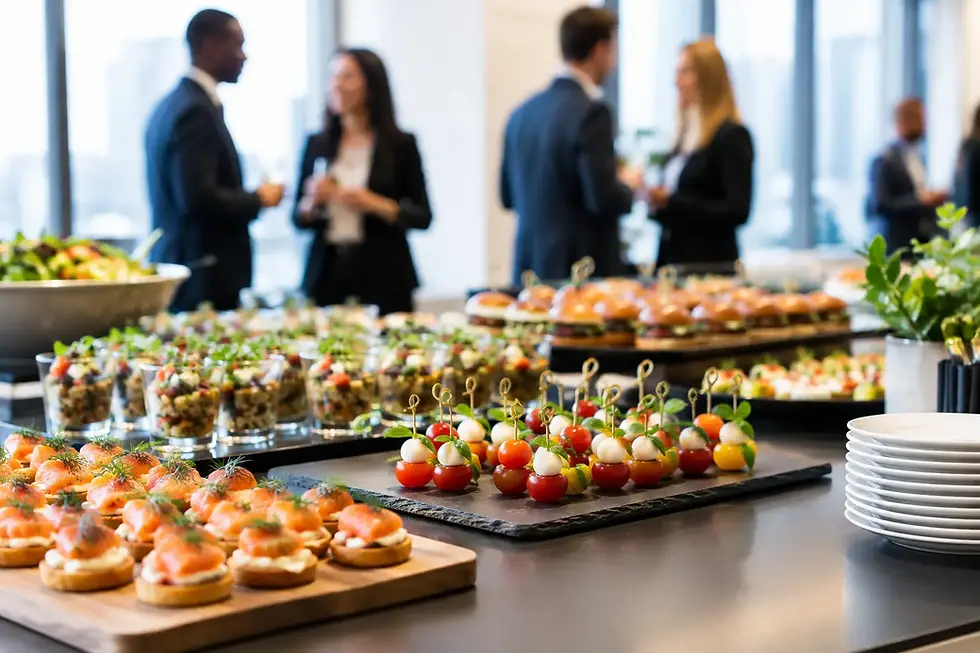
A cocktail reception is built around flow. Guests arrive, receive a drink, and circulate through the space while enjoying passed canapes, chef-attended stations, and small plates. The atmosphere is lively and flexible. Conversations form naturally, and there is no need to pause the room to move everyone through formal courses.
A seated dinner offers a more deliberate rhythm. Guests settle into a beautifully set table, each course arrives with intention, and the meal becomes the central experience of the evening. This format makes room for toasts, meaningful conversation, and the pleasure of sharing a full restaurant-caliber dinner with the people gathered around you.
Neither is inherently more elevated. The difference is in where the energy lives. With a reception, it lives in the room. With a seated dinner, it lives at the table.
When a Cocktail Reception Is the Better Fit
A cocktail-style gathering works particularly well when your guest list includes people from different parts of your life or business. For corporate events, rehearsal celebrations, birthdays, and open-house-style occasions, guests appreciate the freedom to circulate rather than being assigned to one conversation for the entire night.
It also makes excellent use of distinctive spaces. A coastal patio, poolside setting, garden, or indoor-outdoor home becomes part of the experience when guests can move through it. Instead of asking everyone to sit in a single dining area, the event can unfold across several welcoming moments: a raw bar near the terrace, passed hors d'oeuvres in the living room, a carved entrée station under the lights, and a composed dessert display to finish.
The menu is where a cocktail reception becomes more than drinks and appetizers. Thoughtfully paced service can feel abundant without becoming heavy. Imagine chilled local seafood with bright citrus, crisp seasonal vegetables with house-made dips, delicate skewers finished over the grill, and warm bites that reflect the season. Mediterranean and Asian accents can bring freshness and contrast, while classic French technique gives even a small bite a sense of refinement.
A reception does require careful planning around timing and quantity. If the event runs through dinner hours, guests should leave feeling fully fed. That means offering substantial small plates or stations in addition to lighter passed canapes. A beautiful tray of one-bite appetizers alone may be perfect for a 90-minute welcome event, but it is not always enough for a four-hour evening.
The Best Reasons to Choose a Reception
Choose this format when you want a social, flexible atmosphere; have a larger or mixed guest list; want to feature several areas of the property; or prefer guests to arrive and depart within a more relaxed window. It is also a strong choice when a formal place setting would limit capacity or work against the natural character of the venue.
For hosts, the greatest advantage is ease. A professionally managed reception keeps refreshments circulating, surfaces cleared, and guests cared for without requiring you to direct the evening. You can enjoy a conversation without watching the clock for the next course.
When a Seated Dinner Creates More Impact
A seated dinner is ideal when the meal itself is the reason everyone has gathered. Anniversaries, intimate weddings, family milestones, executive dinners, and celebrations with a meaningful toast often benefit from its focused pace.
There is something quietly powerful about inviting guests to a table set specifically for them. The setting signals care before the first course arrives. A seasonal salad may lead into a composed fish dish or tender braised entrée, followed by a dessert that feels like a true finale rather than an afterthought. Each plate has room to be experienced as the chef intended, from temperature and texture to the balance of sauce, garnish, and wine.
Seated service also gives a smaller gathering a feeling of occasion without making it feel stiff. The key is hospitality, not ceremony for its own sake. Comfortable seating, thoughtful pacing, generous wine pours, and attentive service allow guests to settle in. The best dinners make people feel looked after while leaving plenty of room for laughter and unplanned conversation.
This format is especially effective for hosts who want a polished restaurant experience in a personal setting. At home, the table holds a level of intimacy no private dining room can quite replicate. Guests are enjoying a chef-driven meal, but the backdrop is yours: a favorite view, a garden, a family home, or a space that already carries meaning.
Consider the Pace Before You Commit
The trade-off is that seated dinners ask more of the schedule. Most full dinners take two and a half to three hours once guests are at the table, depending on the number of courses, speeches, and how leisurely you want the evening to feel. Guests spend more time with those beside and across from them, and less time mingling with the entire room.
That can be exactly right for a group of 10 to 30 people who already know one another or who have gathered for a shared purpose. For a group of 75 colleagues hoping to meet new contacts, it may feel more restrictive than celebratory.
Guest Count, Space, and Occasion Matter More Than Trend
There is no universal guest-count cutoff between the two formats. A beautifully staffed cocktail reception can work for 20 people, while a seated dinner can be executed elegantly for 60 or more in the right setting. Still, the space should guide the decision.
A seated dinner needs more than enough room for tables. Guests and service staff need clear paths, chairs need space to pull out, and the table layout should not make the room feel crowded. If the dining area is tight, forcing a formal meal into it can diminish the comfort you hoped to create.
A cocktail reception uses space more fluidly, but it needs its own structure. Guests need places to set down a drink, lean into conversation, and take a brief seat. A mix of high-top tables, lounge seating, and stations prevents the event from feeling like everyone is standing in a hallway with a glass in hand.
The occasion provides the final clue. If your goal is to celebrate a couple, honor a milestone, or create an evening of intentional conversation, a seated dinner often has the emotional weight you want. If the goal is connection across a broad group, movement and variety may serve the gathering better.
The Hybrid Option: A Reception Followed by Dinner
For many celebrations, the most satisfying answer is not choosing one format exclusively. Start with a cocktail hour, then invite guests to dinner. This approach gives everyone time to arrive, settle in, and mingle before the meal becomes more focused.
It is particularly well suited to weddings, milestone birthdays, and elevated home celebrations. Guests enjoy a welcome drink and passed bites while photographs are finished or late arrivals settle in. Then the dinner begins without the feeling that anyone has been waiting around hungry.
A hybrid format can also be tailored to the event. Perhaps the evening begins with oysters, seasonal crudo, and passed warm bites, followed by a family-style coastal dinner that encourages sharing. Or it may open with cocktails and a chef station before moving into individually plated courses for a more formal finish.
Make the Menu Match the Way You Want Guests to Feel
The menu should support the format rather than compete with it. At a reception, choose food that is easy to enjoy while standing and speaking. A small plate can still be sophisticated, but it should be composed for comfort, with thoughtful portions and minimal fuss.
For seated dinners, use the sequence of courses to build a story. Bright, chilled elements can open the palate; richer preparations can follow; and dessert can return to freshness, fruit, or a refined touch of chocolate. Seasonal ingredients keep the meal grounded in place, while chef-led customization makes it feel personal to the host.
At Flavor Affinity, planning begins with the experience you want guests to have, not a fixed template. The goal is to make the menu, service style, and setting feel naturally aligned, whether that means a lively evening of shared plates or an unhurried dinner under the coastal sky.
The best choice is the one that lets you be fully present. Picture the room at its happiest point: Are guests circulating with a favorite bite and a glass in hand, or are they lingering over a beautifully plated course at a table filled with conversation? Start there, and the format will usually reveal itself.


Comments